Image

The USC SHIELD Executive Program in Global Space and Deterrence is a joint program with the University of Southern California’s Price School of Public Policy and Viterbi School of Engineering. Its creation benefited from an engagement with the Missile Defense Advocacy Alliance (MDAA). This 8-month program sets out to educate aspiring senior leaders from the military, government, and innovation communities about the intersection of public policy and engineering, which are too often separate within the complex and growing field of defense security.

SHIELD

  • Space - The domains that demand new engineering and policy innovations, physical and cyber, and their integration with Land, Sea, and Air.
  • History - Past, present, and future, the lens through which we evaluate and formulate new policies.
  • Industry - The engine that translates academic work into reality.
  • Engineering - The research, technology, and planning that organizes our vision.
  • Leadership - The prime mover across all disciplines.
  • Deterrence - Our goal in all our endeavors.

This executive education program is designed for upwardly mobile professionals and leaders of their field. Program participants will take advantage of the flexibility and interactivity offered by engaging in a hybrid program model, with in-person and online engagement throughout the program. Upon successful completion of the program, participants receive a University of Southern California Continuing Education Certificate.

Program Dates: October 8, 2026 - April 24, 2027; 18 Program Days


Delivery Method: Online Interactive & In-Person Residency


The Executive Program in Global Space and Deterrence will be delivered as a hybrid course, with students attending lectures online with interactivity or on-campus. Please see the course schedule to confirm the delivery method for each week of the program.

Online Interactive: Course delivery is completely online and in real-time, enabling interaction with the instructor and fellow participants. Participants have the flexibility of completing the course from a distance utilizing USC Viterbi's Distance Education Network (DEN) technology. Students are required to be online for the entirety of each day's session.

Overview of online interactive:

  • Virtually participate in the course live - with the ability to either ask questions or chat questions to the entire class.
  • WebEx technologies provide the option to call into the class and view the entire lecture/materials on a personal computer, or to participate on a computer without having to utilize a phone line.
  • Ability to logon and view archived course information. This includes course documents and streaming video of the lectures.

Residency (USC Campus and Washington D.C.): Three residency sessions will be held in state-of-the-art facilities on the University of Southern California campus, located in downtown Los Angeles. One residency session will be held at the USC Washington D.C. campus.

The in-person component of this program offers participants the opportunity to connect and collaborate with other senior military and government officials. Students will join renowned industry experts, and USC Price & Viterbi faculty to bridge the gap between theoretical learning and real-life experience.

Overview of residency activities:

  • Lunchtime forums with industry experts.
  • Networking event(s).
  • Discussions with leading faculty researchers in their respected fields.
  • Site visits.

USC Los Angeles Residency Locations:

Fall Residency:

October:
USC Dr. Allen and Charlotte Ginsburg Human-Centered Computation Hall - MAP
1031 Downey Way, GCS 107
Los Angeles, CA 90089

November: TBD

Spring Residency: TBD

Welcome Reception:

Moreton Fig - MAP
3607 Trousdale Pkwy, Los Angeles, CA 90089

USC Washington D.C. Residency Location:

USC Washington D.C. Office - MAP
1771 N. Street NW 
Washington, D.C. 20036

Closing Reception: TBD

Lodging Information (Los Angeles): https://viterbiexeced.usc.edu/visiting/accommodations/

Lodging Information (Washington DC): https://viterbiexeced.usc.edu/washington-d-c-accommodations/

Program Schedule


Past USC Faculty Lecturers


Image
Ali E. Abbas, Ph.D.
Sol Price School of Public Policy

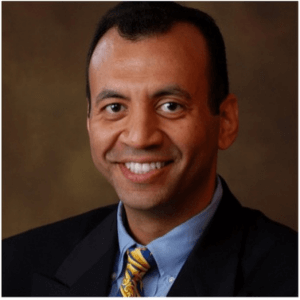
Dr. Ali Abbas is Professor of Industrial and Systems Engineering and Public Policy, a joint appointment between the USC Viterbi School of Engineering and the USC Price School of Public Policy. He previously served as the Director of the USC Neely Center for Ethical Leadership and Decision Making (DECIDE) and the USC Center for Risk and Economic Analysis of Terrorism Events (CREATE).

Before joining USC, Dr. Abbas was the Art Davis Faculty Scholar in the Department of Industrial and Enterprise Systems Engineering, College of Engineering, University of Illinois at Urbana-Champaign. Prior to his time at the University of Illinois, Dr. Abbas was a lecturer in the Department of Management Science and Engineering, Stanford University, where he also earned his Ph.D. in Management Science and Engineering, Ph.D. minor in Electrical Engineering, M.S. in Engineering Economic Systems and Operations Research, and M.S. in Electrical Engineering.

The recipient of multiple awards from the National Science Foundation for his work, Dr. Abbas’ research focuses on decision analysis, risk analysis, multiattribute utility theory, and data-based decision making. He is widely published in books, journals, and conference publications, and has shared his expertise through television appearances, TEDx and other invited talks.

Dr. Abbas regularly teaches courses on decision analysis, and has taught numerous executive education courses at a variety of institutions, such as Stanford University, BP, Southern California Edison and numerous other institutions.

In addition to his academic career, Dr. Abbas is founder, president, and CEO of Ahoona Corp, a decision making social network that has several thousand users around the world. He has been on the Advisory Boards of Hedgestreet Inc., a binary futures exchange, and is a board member of the Decision Education Foundation, a volunteer nonprofit organization that empowers youth to make better decisions about their lives. Dr. Abbas also has extensive consulting and management experience.

Image
Robert Banks, MPD
Annenberg School for Communication and Journalism

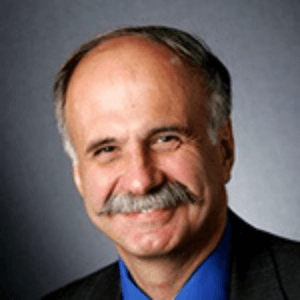
Robert Banks is a clinical associate professor of public diplomacy at USC Annenberg, a CPD faculty fellow, and director of the master of public diplomacy program. He is a former senior U.S. Foreign Service Officer, specializing in public diplomacy, now focused on helping his students understand public diplomacy’s role in foreign affairs and its real-world applications in the areas of strategy and evaluation.

During his 28-year career as a public diplomacy practitioner, he served as assistant executive officer in Bonn, West Germany; deputy public affairs officer (PAO) in Nicosia, Cyprus; assistant press attaché in Seoul, Korea; east Asia policy officer in the Worldnet Television and Film Service; press attaché in Managua, Nicaragua; cultural attaché in Seoul; examiner for the foreign service oral entrance exam in the Bureau of Human Resources; planning and coordination officer in the office of public diplomacy in the Bureau of Western Hemisphere Affairs; PAO in Buenos Aires, Argentina; state department chair on the faculty of the Marine Corps War College in Quantico, VA., where he taught regional studies; and U.S. public diplomat in residence at USC’s Center on Public Diplomacy.

Image
Tara Blanc, Ph.D.
Sol Price School of Public Policy

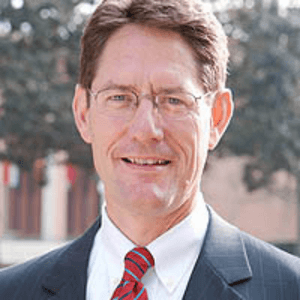
Dr. Tara Blanc is an associate professor (teaching) in the USC Sol Price School of Public Policy. She has taught at both the undergraduate and graduate level, including courses in public administration and public management, performance management, strategic planning, human resource management, public service ethics, leadership, organizational behavior, and the MPA capstone. Her research interests include civic engagement, political behavior, and direct democracy.

Prior to joining the USC faculty, Dr. Blanc was a faculty member in the School of Public Affairs at Arizona State University and served for eight years as associate director for the ASU Cronkite/Eight Public Opinion Poll, coordinating the design, implementation, data analysis, and dissemination of monthly public opinion polls measuring attitudes about politics and public policy in Arizona.

Dr. Blanc earned a bachelor of arts degree in journalism, a master’s degree in mass communication, and a doctor of philosophy degree in public administration from Arizona State University. In addition to teaching full time, she is a consultant and author with more than 30 years of experience, providing research and consulting services to clients in both the public and private sectors. She resides in Tempe, Arizona.

Image
Mike Gruntman, Ph.D.
Viterbi School of Engineering

Mike Gruntman, Ph.D. is a Professor of Astronautics and Aerospace and Mechanical Engineering.

His research focuses are: Astronautics, spacecraft and space mission design, space physics, space instrumentation and sensors, space plasmas, spacecraft technologies, rocketry, propulsion, orbital debris, missile defense.  Dr. Gruntman has authored and co-authored more than 300 scholarly publications, including 4 books. His education videos have over 1.2 million views on YouTube. Dr. Gruntman is a member (Academician) of the International Academy of Astronautics.

Awards:

2011 NASA Group Achievement Award
2006 International Academy of Astronautics Luigi Napolitano Award
2001 NASA NASA Group Achievement Award
2000 NASA NASA Group Achievement Award
1999 USC Viterbi School of Engineering Exceptional Service Award
1998 Los Angeles Section of the American Institute of Aeronautics and Astronautics Certificate
1997 Los Angeles Section of the American Institute of Aeronautics and Astronautics Certificate of Appreciation

Image
Randall Hill, Ph.D.
Viterbi School of Engineering

Randall Hill, Ph.D. became the executive director of the USC Institute for Creative Technologies in 2006. A leader in understanding how classic storytelling and high-tech tools can create meaningful learning experiences, Hill steers the institute’s exploration of how virtual humans, mixed reality worlds, advanced computer graphics, dramatic films, social simulations and educational video games can augment more traditional methods for imparting lessons. He oversees a diverse team of scientists, storytellers, artists and educators as they pioneer and evaluate new ways to deliver effective teaching and training in areas including leadership, cultural awareness, negotiation and mental health treatment and assessment.

Hill is also a research professor of computer science at the USC Viterbi School of Engineering. His research focus is on using intelligent tutoring systems and virtual humans to create immersive learning environments.

Hill’s career at USC began in 1995 at the USC Information Sciences Institute where he worked on the development of models of human behavior and decision-making for real-time simulation environments. He joined the USC Institute for Creative Technologies in 2000 as a senior scientist.

Prior to his work at USC, Hill served as a group supervisor and the work area manager for network automation in the Deep Space Network Advanced Technology Program at NASA’s Jet Propulsion Laboratory.

Hill graduated with a bachelor of science degree from the United States Military Academy at West Point and subsequently served as a commissioned officer in the U.S. Army for six years with assignments in field artillery and military intelligence. He earned his M.S. and Ph.D. degrees in computer science from the University of Southern California.

He is a member of the American Association for Artificial Intelligence and has written over 50 technical publications, including a co-authored article, “Toward Virtual Humans” featured in AI Magazine in the summer of 2006.

Image
Dora Kingsley Vertenten, PhD
Sol Price School of Public Policy

Dr. Dora Kingsley Vertenten is a Professor of Public Policy at the Sol Price School of Public Policy, University of Southern California where she teaches collaborative governance, public policy analysis, digital literacy and Capstone courses. She serves as faculty director of USC’s master’s in public administration (MPA) online degree and chair of the MPA Degree Committee responsible for accreditation and program oversight.  Dr. Vertenten has been awarded the Robert Biller Award for outstanding faculty and several student and alumni recognitions.

Her research examines participatory democracy and communications in public administration.  She has trained state and federal elected officials and their staff in 30 states plus thousands of graduate students both on campus, online and internationally. Her experience in campaign management for electoral politics (Presidential, State Officers and Congressional candidates) combined with her community and volunteer engagement makes her well suited to teach.

Dr. Vertenten is a 20-year elected Fellow of the National Academy of Public Administration (NAPAWASH.org) and an active participant in several academic associations covering policy, public administration and political science.  She is a frequent speaker for the California State Association of Counties (CSAC) and other organizations.

The widow of Col. James A. Vertenten, U.S. Air Force, Dr. Vertenten remains an active participant in the foundation her husband directed in Washington, D.C., the Air Force Historical Foundation (https://afhistory.org/).

Image
Rym Kaki, Ph.D.
Sol Price School of Public Policy

Dr. Rym Kaki’s teaching and research foci pertain to human behavior in public and non-profit organizations, development NGOs’ project design and evaluation, comparative public policy analysis, international development administration and social finance innovations as applied to urban poverty reduction policy. She hails from the global social finance and micro-enterprise development professions where she worked in strategic management, research and development, program evaluation and social impact assessment. She brings extensive practical experience in designing and evaluating financial and non-financial solutions to support community-oriented economic empowerment and financial belonging, with global consultancy assignments taking her to the North Africa, Middle East and South Asia regions.

She is currently a board member of the Section on International and Comparative Public Administration (SICA) at the American Society of Public Administration (ASPA). In 2018, she has co-founded the new Section on African Public Administration (SAPA) at ASPA, bringing together American, diaspora and global scholars and practitioners with a commitment to advance the science, processes and art of public administration on the African continent.

Dr. Kaki was a Fulbright scholar, a Visiting Assistant Professor and Director of International Education at the South Mediterranean University. She is currently the Vice Chair of the Department of Governance and Management at the Price School. She holds an M.A. in International Policy Studies, Monterey Institute of International Studies.

Image
Seon Ho Kim, Ph.D.
Viterbi School of Engineering

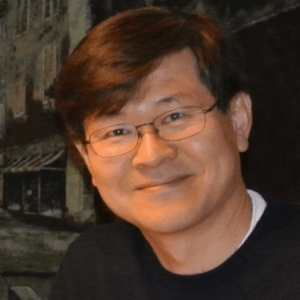
Seon Ho Kim, Ph.D. is the Associate Director of the Integrated Media Systems Center at the USC Viterbi School of Engineering.

He also teaches Data Informatics in the Data Program at the USC Viterbi School of Engineering.

He received his BS degree in Electronic Engineering from the Yonsei University, Seoul, Korea in 1986. He received his M.S. in Electrical Engineering and Ph.D. in Computer Science from the University of Southern California in 1994 and 1999 respectively. Between 1999 and 2010, he worked as a faculty member at University of Denver, Colorado, and University of the District of Columbia, Washington DC.

Dr. Kim's current research interest is on spatial database, Big Data, IoT and Smart City, multimedia systems, and image machine learning. He has been leading MediaQ project which is a social media data collection and management platform, and recently TVDP project which focuses on a translational visual data platform for urban geo-tagged visual data collection, processing, and analysis. Dr. Kim’s projects have been funded by US federal and local government, industries such as Google, Northrop Grumman Corp., Microsoft, Oracle, and Intel. He is a senior member of IEEE and a member of ACM. He worked as the president of KSEA-SC (Korean American Scientists and Engineers Association Southern California Chapter) and the president of KOCSEA (Korean Computer Scientists and Engineers in America).

Dr. Kim is also the founder and president of SoDAVi (Social Data Analysis and Visulization) Group, a non-profit organization which aims for providing data collection and analysis service to Korean-American community in Southern California.

Image
Berok Khoshnevis, Ph.D.
Viterbi School of Engineering

Behrokh “Berok” Khoshnevis is the Louise L. Dunn Distinguished Professor of Engineering and is the Director of the Center for Rapid Automated Fabrication Technologies (CRAFT) at the University of Southern California. He is active in robotics, and mechatronics related research and development projects that include the development of several novel Additive Manufacturing (3D Printing) processes such as Contour Crafting mega-scale fabrication, SIS, which is licensed to HP, for fabrication of polymeric and metallic parts and SSS for fabrication of high temperature alloys, ceramics and composites, as well as development of mechatronics systems for biomedical applications (e.g., digital dental prostheses fabrication, robotics for orthodontics, rehabilitation engineering, and tactile sensing devices), autonomous mobile and modular robots for fabrication and assembly on Earth, in space and on other planets, and specialized innovative equipment for oil and gas as well as renewable energy industries. He has numerous inventions and over 100 US and international patents as well as nearly 200 refereed technical publications.

He is a member of the National Academy of Engineering, a Fellow of the National Academy of Inventors, a Fellow of the American Association for the Advancement of Science, a NASA Innovative Advanced Concept Fellow, and is a Fellow member of the Society of Manufacturing Engineers, the Institute of Industrial & Systems Engineering, and the Society for Computer Simulation. He has won numerous awards including, USC School of Engineering Senior Research award, Pete Lohman Best Engineering Alumni award, the Khwarizmi International Award (KIA Laureate) and Sharif University of Technology One of Top 50 among over 50,000 Alumni Award.

Because of his Contour Crafting invention, he received the 2014 Grand Prize among 1000+ globally competing technologies in the Create the Future design contest which was organized by NASA. Contour Crafting was selected earlier as one of the top 25 out of more than 4000 candidate inventions by the History Channel Modern Marvels program and the National Inventor’s Hall of Fame; and has been identified as one of the major disruptive technologies of our time by the renowned Harvard Professor, Clayton Christensen, who coined the term “disruptive technology”. The technology has been exhibited in numerous science & technology and art museums around the world.

Dr. Khoshnevis’ another 3D printing invention, Selective Separation Shaping (SSS) won another international competition Grand Prize by NASA in 2016 as the most capable and versatile metallic and ceramic Additive Manufacturing technology for micro-gravity and planetary applications.

He was recognized in 2017 by the Connected World magazine as one of top 10 pioneers in the Internet of Things (IoT). Connected World has celebrated luminaries such as Elon Musk as other IoT pioneers.

His inventions routinely receive extensive worldwide publicity in acclaimed media such as New York Times, Los Angeles Times, Business Week, Der Spiegel, New Scientist, and major national and international television and radio networks. His TEDx talk on the subject of automated construction has been viewed more than one million times and was selected by the TED organization as one of five TEDx Moments among over 30,000 presentations.

Dr. Khoshnevis’ educational activities at USC include the teaching of a popular graduate course on Invention and Technology Development. He routinely conducts lectures and seminars and gives keynote speeches on the subject of invention.

Image
Azad Madni, Ph.D.
Viterbi School of Engineering
Azad Madni, Ph.D., is a member of the National Academy of Engineering and Professor of Astronautical Engineering. He is the holder of the Northrop Grumman Foundation Fred O'Green Chair in Engineering. He has a joint appointment in the Astani Department of Civil and Environmental Engineering. He is the Executive Director of USC's Systems Architecting and Engineering Program in the Viterbi School of Engineering. He is also the Director of the Distributed Autonomy and Intelligent Systems Laboratory. He is the chair and co-founder of the IEEE SMC Society's Systems Science and Engineering award-winning Technical Committee for Model Based Systems Engineering. He has served as General Chair of the Conference on Systems Engineering Research since 2008. He is a Life Fellow/Fellow of AAAS, AIAA, IEEE, INCOSE, IETE, SDPS, and Washington Academy of Science. He has received prestigious awards and honors from nine different societies. His research has been sponsored by several government agencies including DARPA, NSF, DHS S&T, DoD-SERC, NASA, DTRA, OSD, MDA, ONR, AFOSR, AFRL, ARI, ARL, RDECOM, CECOM, ERDC, NAVAIR, NAVSEA, SPAWAR, MARCOR, DOE, and NIST. His research has also been sponsored by major aerospace and automotive companies including Boeing, General Motors, Raytheon, Northrop Grumman Corporation, SAIC, and Lockheed Martin ORINCON.
Image
Ryan McAlinden
Viterbi School of Engineering

Ryan McAlinden is Director of Defense and Intelligence Programs for the USC Institute for Creative Technologies (ICT). Previously he served as senior advisor, Synthetic Training Environment (STE) Cross Functional Team (CFT) for the Army Futures Command and as ICT’s Director of Modeling, Simulation & Training at the USC Institute for Creative Technologies (ICT), leading projects primarily for the US Department of Defense centered around geospatial visualization and analysis. He is an adjunct assistant professor of the practice of spatial sciences with the USC Spatial Sciences Institute.

His primary research interest is identifying, developing and employing novel ways for human users to exploit and better understand the 3D virtual world around them. Immersive mediums like virtual and augmented reality continue to proliferate and are now mainstays in our society. Map-based big data are used in many of the most popular applications on our devices, from review apps, to ride sharing, to self-driving cars. However, the ability to produce and visualize 3D geospatial content for these devices remains elusive, mostly because the process for creating such content is existentially an anthropomorphic process, and as a result time-consuming, inefficient and often inconsistent.

McAlinden’s goal, through automation, is to ease the burden of generating 3D terrain content for our electronic devices and systems, as quickly and cost-effectively as possible. Ultimately, he seeks to improve the agency that human users have with their maps, and reduce the human load for creating them.

McAlinden rejoined ICT in 2013 after a three-year post as a senior scientist at the North Atlantic Treaty Organization (NATO) in The Hague, Netherlands. There he led the provision of operational and geospatial analysis support to the International Security Assistance Force (ISAF) Headquarters in Kabul, Afghanistan. Prior to joining NATO, McAlinden worked as a computer scientist at ICT from 2002 through 2009 where he led several projects related to geospatial modeling and simulation.

Image
Peter J. Robertson, Ph.D.
Sol Price School of Public Policy
Peter J. Robertson, Ph.D. is an Associate Professor at the USC Price School of Public Policy. His research and teaching interests focus on the development and implementation of collaborative organizational systems that enhance the quality of life for human beings, their communities, and the natural environment. The foci of his latest publications include conceptual papers proposing a set of organizing principles for collaborative organizational and governance systems, investigations into real-world efforts to create collaborative inter-organizational systems, and the results of agent-based computer simulations exploring the dynamics of collaborative decision-making mechanisms. Earlier research has addressed issues pertaining to interorganizational networks, employee attitudes and behavior, the process and outcomes of organizational change, and school-based management as a mechanism for public school reform. Professor Robertson’s research has been published in a number of journals and books, including the Journal of Public Administration Research and Theory, Public Management Review, Public Administration Review, Academy of Management Journal, Educational Administration Quarterly, and Research in Organizational Change and Development. He has provided consulting and training for a variety of organizations, and is a member of the Academy of Management, the Public Management Research Association, and the Institute of Noetic Sciences.
Image
Neil Siegel, Ph.D.
Viterbi School of Engineering - Viterbi Lead Instructor

Neil Siegel is the Viterbi Lead Instructor for SHIELD and the IBM Professor of Engineering Management in the Epstein Department of Industrial and Systems Engineering within the Viterbi School of Engineering at the University of Southern California. He is a recognized expert in the design and development of large, complex systems that serve important societal needs, both as a practitioner at the largest scales, and as a researcher.

Until the end of 2015, he held the position of sector vice-president and chief technology officer at Northrop Grumman. He led the sector’s technology activities, provided oversight of the sector’s research portfolio ($600M / year), and oversaw the design and development of solutions for their customers’ most complex and most-important problems. Prior to that role, Dr. Siegel was the sector’s vice-president and chief engineer, where he oversaw the sector’s 12,000plus scientists and engineers, directed engineering process improvements, and led activities intended to further the development of the company’s top technical talent.

Previously, Dr. Siegel served as vice-president and chief technology officer of Northrop Grumman’s Mission Systems sector, and before that, vice-president and general manager of the company’s Tactical Systems division. He has been responsible for engineering projects outside of the United States, including work in the U.K., NATO, Saudi Arabia, etc. In all, he served as a vice-president of the company for nearly 18 years.

Dr. Siegel led the engineering on a large number of successful fielded military, intelligence, and commercial systems, including the U.S. Blue-Force Tracker; the Army’s first unmanned aerial vehicle; the Forward-Area Air Defense system; the fire-control segment of the world’s first complete laser weapon system; and played important roles for many other systems for ground, sea, space, and cyber-space. He has made a particular specialty of air-defense and missile-defense systems. These systems have repeatedly been cited as model programs and important national capabilities. He also led work for the steel industry, the movie industry, the healthcare industry, and the electric power industry. The concepts he helped to invent to reduce unintended interactions between drugs prescribed by different doctors are used almost universally in the U.S, saving many lives each year. He invented concepts that are used in a very large number of consumer devices around the world (including GPS receivers, smart phones, and tablet computers). He is a recognized expert in information networking, especially network management, wireless networks, and networks of mobile devices. He holds nearly 50 issued and pending patents worldwide. His expertise is recognized by the U.S. Government, as indicated by past membership on the Defense Science Board, the Army Science Board, and other senior government advisory panels.

He is certified by the International Congress on Systems Engineering (INCOSE) as an expert systems engineering practitioner (ESEP; their highest level of certification), and also a certified “black-belt” practitioner in the well-known 6-sigma process-optimization methodology.

Dr. Siegel has a doctorate in systems engineering from the University of Southern California. His advisor there was the noted computer scientist and systems engineer Dr. Barry Boehm.

Among his many honors are the following:

  • Election to the U.S. National Academy of Engineering
  • Selection as a fellow of the U.S. National Academy of Inventors
  • Selection as a fellow of the Institute of Electrical and Electronics Engineers (IEEE)
  • Selection as a Fellow of the International Congress on Systems Engineering (INCOSE)
  • The IEEE Simon Ramo Medal for systems engineering and systems science
  • His former company’s Chairman’s Award for Innovation (three times)
  • The Army’s Order of Saint Barbara
  • The iCMG award for system architecture
  • The Northern Virginia Technology Council CTO-of-the-year award

Recent publications include a textbook on engineering project management (Wiley), and a chapter in a book on ethics in engineering (Cambridge University Press). Public service includes board positions for two charitable organizations (including the largest non-profile hospice in California), 10 years as an elected public official (California Hazard Abatement District board), membership on the board of directors for the Electric Infrastructure Security Council, and former membership on the research foundation of the State University of New York, as well as many other items.

Contact Information


Program Administrators:

Price School of Public Policy:
Frank V. Zerunyan (fzerunya@usc.edu); Professor of the Practice of Governance and Director of Executive Education Programs

Viterbi School of Engineering:
Candace House Teixeira (housec@usc.edu); Associate Dean of Corporate Engagement and Programs

Please contact the following individuals for questions about logistics:

For questions about Spring residency:
Ashley Coelho (acoelho@usc.edu)

For questions about registration, payments, online-interactive delivery, Fall Residency or the Washington, D.C. Residency:
Karen Escobar (kyescoba@usc.edu)

Published on April 9th, 2025Last updated on August 14th, 2026