The Viterbi vs. Pandemics! lecture series addresses epidemics in a comprehensive way from the perspective of USC Viterbi faculty who have contributed in developing new understanding and new methods to predict, analyze, and combat COVID-19. The lectures range from spatio-temporal modeling, to the fluid dynamics of contagion, to virus biology, bioengineering and vaccine development, to approaches for decontamination and automation, to risk estimation and contact tracing, and to communication
Lectures aim to provide a rigorous framework for addressing the COVID-19 pandemic, to educate and inform and to stimulate additional efforts on this extraordinary challenge.
Lecture Sessions: September 10 – November 19, Thursdays at 6:00pm (PT)
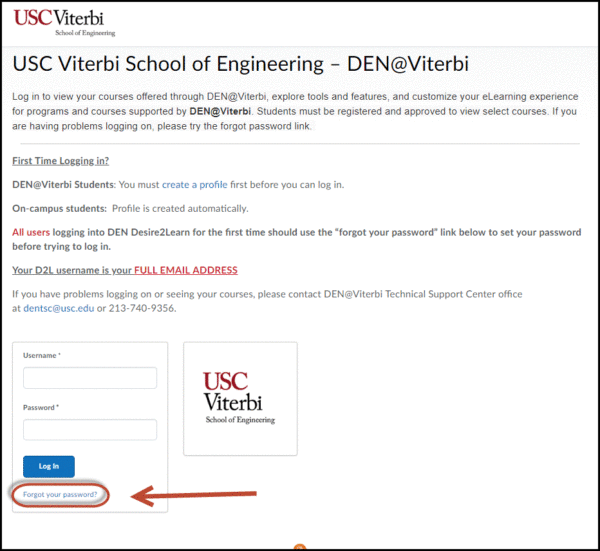
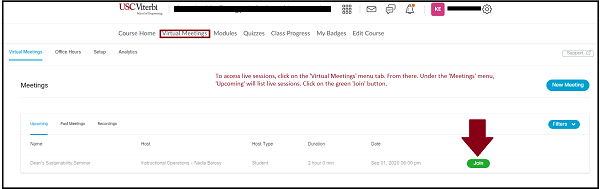
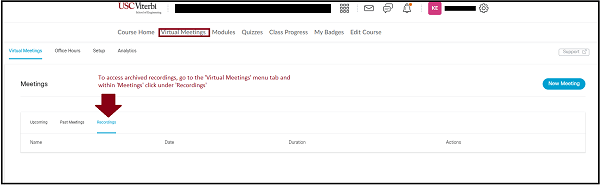
Lectures are also available asynchronously and can be completed at your own pace, via the DEN@Viterbi learning management system, D2L. You will have the opportunity to earn online badges after each lecture, which can be listed on platforms such as LinkedIn. Students that successfully complete the lecture series and corresponding online quizzes can also request a USC Viterbi Continuing Education Certificate with Continuing Education Units (CEUs).
Lecture Topics
The Viterbi vs. Pandemics! lecture series consists of 1-2 hour lectures led by USC Viterbi Faculty. Each lecture provides a high-level overview of the subject area and concludes with a quiz, measuring your topic comprehension.

This lecture will present a model for the spreading of epidemics based on an analogy with chemical reaction and diffusion processes. The model accounts for spatial effects, including the emergence of contagion waves, currently missing from the standard (SIR) models. We discuss how epidemics initiate and how they spread and what parameters can be controlled to arrest their growth.
Lecture Faculty
Yannis C. Yortsos is Dean of the USC Viterbi School of Engineering, and Professor in the Mork Family Department of Chemical Engineering and Materials Science.
Assad Oberai is Vice Dean of Research in the USC Viterbi School of Engineering, and Professor in the Department of Aerospace and Mechanical Engineering.
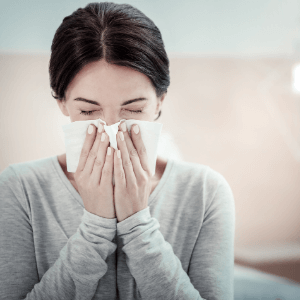
This lecture will describe the fluid mechanics of air transmission of SARS-CoV-2 via droplets and aerosols, with an emphasis on indoor settings. Ongoing experiments and modeling efforts at Viterbi will be discussed in the context of the present scientific knowledge, highlighting open questions and challenges ahead.
Lecture Faculty
Ivan Bermejo-Moreno is an assistant professor in the AME Department at USC. His research combines numerical methods, physical modeling, and high-performance computing for the simulation and analysis of turbulent fluid flows involving multi-physics phenomena.
Fokion Egolfopoulos is the William E. Leonhard Professor of Engineering in the AME Department. His research focuses on the fundamental physical and chemical processes that control phenomena encountered in high-activation energy reacting flows.
Mitul Luhar is the Henry Salvatori Early Career Chair and assistant professor in the AME department. His research characterizes turbulent flows and fluid-structure interaction phenomena important to aerodynamic and hydrodynamic design, soft robotics, and environmental processes.
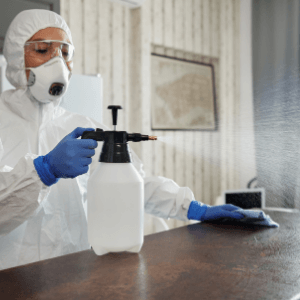
Previous research had shown the effectiveness of UV-C as a disinfection method for a range of bacteria and viruses, including coronaviruses. As such, a UV-C treatment in combination with a chemical wipe is a common cleaning protocol in a medical setting. Due to its universal-nature, UV-C began to increase in 2018 due to the rise of antibiotic resistant bacteria, but the approach became more well-known during the current COVID-19 pandemic due to the need to reuse PPE.
This session will first discuss how disinfection based on UV-C operates, from a mechanistic level, and then we will review recent approaches for UV-C disinfection systems, evaluating efficacy, safety, and design considerations for different use cases.
Lecture Faculty
Andrea M Armani received her BA in physics from the University of Chicago and her PhD in applied physics with a minor in biology from the California Institute of Technology, and she is currently the Ray Irani Chair of Engineering and Materials Science and a Professor of Chemical Engineering and Materials Science at the University of Southern California.
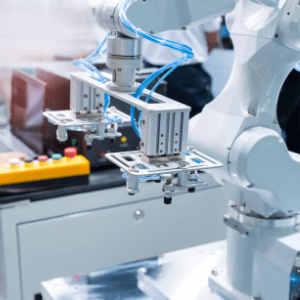
Many tasks pose inherent risks to humans either due to potential contamination of the workspace or close proximity of other human workers. Automation technologies are enabling humans to safely carry out disinfection tasks, support manufacturing, and logistics. This presentation will provide an overview of robotic disinfection, collaborative assembly, robotic machine tending, and automated material handling as illustrative examples of automation technologies that are being used during the pandemic to ensure human safety.
Lecture Faculty:
Satyandra Kumar Gupta is the Smith International Professor in the Department of Aerospace and Mechanical Engineering and Department of Computer Science in Viterbi School of Engineering at the University of Southern California. He serves as the Director of the Center for Advanced Manufacturing.
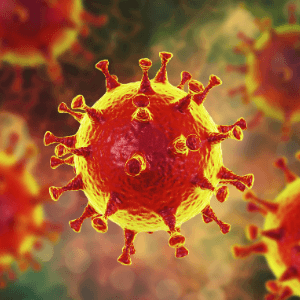
We will discuss how to define the risk of infection from an epidemic and how to estimate and visualize the risk over time for different communities. We will use real data from LA county to illustrate the approach.
Lecture Faculty
Bhaskar Krishnamachari is the Ming Hsieh Faculty Fellow and Professor in Electrical and Computer Engineering and Director of the USC Viterbi Center for Cyber-Physical Systems and the Internet of Things. His research and teaching interests include next-generation wireless networks, internet of things, vehicular networks, machine learning, data analytics, and blockchain technologies.
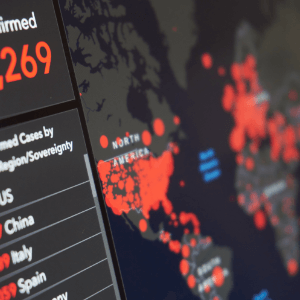
Going from data to accurate and reliable epidemic forecasts is not only about choosing or developing a model, but also about many decisions that go into data pre-processing, model simplification, learnability, strategy of learning, and hyper-parameter selection.
This lecture will cover how to overcome the challenges of epidemic forecasting by making good decisions at these various stages of "data to forecasts." This lecture will review the basics of conventional SIR modeling (and its main variant: SEIR) and introduce the novel USC approach with comparative discussion and a demonstration on the US COVID-19 data.
Lecture Faculty
Dr. Vasilis Marmarelis (vzm.usc.edu) is Dean's Professor of Biomedical Engineering and leads the Data Analytics Program in BME, He is the founder of the Biomedical Modeling & Simulation Resource at USC (since 1985) and currently leads a multi-institutional study on modeling the dynamics in the pathogenesis of Alzheimer's Disease.
Dr. Viktor Prasanna (ceng.usc.edu/~prasanna) is Charles Lee Powell Chair in Engineering in the Ming Hsieh Department of Electrical and Computer Engineering. He leads the FPGA Lab (fpga.usc.edu) and Data Science Lab (dslab.usc.edu) at USC.
Dr. Ajitesh Srivastava is a Senior Research Associate at Ming Hsieh Department of Computer and Electrical Engineering and a member of the Data Science Lab led by Prof. Viktor K. Prasanna. His research interests include Data Mining, Algorithms, and Network Science applied to epidemics, social good, social networks, architecture, and smart grids. During the COVID-19 pandemic he has been producing weekly forecasts of COVID-19 cases and deaths for the CDC.
In this lecture, we will talk briefly about the immunology behind the COVID-19 vaccine, status of different vaccine platforms in development for COVID-19, and how to balance safety and efficacy as we race to develop a COVID-19 vaccine.
Lecture Faculty
Pin Wang is the Zohrab A. Kaprielian fellow in Engineering and Professor of Chemical Engineering and Materials Science and Biomedical Engineering. Research in his laboratory focuses on the emerging field of “immunobioengineering” with the aim of employing engineering tools and principles to quantitatively understand the immune system in health and disease and to develop novel molecular and cellular immunotherapies for disease treatment.

In this lecture, we will give an overview of how to use machine learning and AI to combat COVID-19. In particular, we will discuss how to identify and mitigate misinformation on COVID-19 on social media.
Lecture Faculty
Dr. Yan Liu is the Philip and Cayley MacDonald associate Professor in the Computer Science Department. She is also the director of the Machine Learning Center. Her research interests are machine learning, AI and their applications for social good.

In order to stop the pandemic in its tracks, we need a nuanced risk assessment that takes many factors into consideration, including people’s mobility patterns. In this lecture, we discuss various approaches to collect people's mobility and contact patterns for various contact tracing and risk estimation applications.
Lecture Faculty
Cyrus Shahabi is a professor of computer science, electrical & computer engineering and spatial sciences, and the chair of USC’s Department of Computer Science. He authored two books and more than three hundred research papers in databases, GIS and multimedia with more than 12 US Patents.

This lecture will discuss using directed evolution as a tool to develop new therapeutics and diagnostics particularly for coronaviruses.
Lecture Faculty
Richard Roberts is a professor of chemistry, chemical engineering and materials science, molecular biology, and biomedical engineering and a member of the Norris cancer center. His laboratory uses a directed evolution technology he invented, termed mRNA display, to design new peptides and proteins to study biology and improve human health.

This lecture overviews the role of built environments in virus control/spread and covers findings from a survey that investigated how work from home during the COVID-19 pandemic impacted office workers’ health and productivity.
Lecture Faculty
Dr. Burcin Becerik-Gerber is Dean’s Professor of Civil and Environmental Engineering. She is Co-Director for the Center for Intelligent Environments.
Dr. Gale Lucas is a Research Assistant Professor at USC’s Institute for Creative Technologies with appointments in Computer Science, Civil and Environmental Engineering and Psychology. She is Co-Director for the Center for Intelligent Environments.